Life skills vs academic skills is a topic that highlights the difference between knowledge gained through formal education and practical abilities needed in everyday life. In today’s competitive world, success is not determined by grades alone. While academic skills help you excel in school, college, and professional exams, life skills are equally important for handling real-world challenges.
Understanding both types of skills is essential for personal growth, career success, and overall well-being. In this article, we will explore what academic and life skills are, their key differences, and why developing both is crucial for a balanced and successful life.
What Are Academic Skills?
Academic skills are the knowledge and abilities that students gain through formal education. These skills focus on learning concepts, theories, and techniques that help individuals succeed in school, college, and professional studies. Academic skills are essential for understanding subjects deeply, performing well in exams, and preparing for future careers.
Examples of Academic Skills
- Reading and Writing: Understanding texts, expressing ideas clearly, and communicating effectively.
- Mathematics and Science: Solving problems using logic, numbers, and scientific principles.
- Research Skills: Collecting, analyzing, and interpreting information accurately.
- Technical Knowledge: Specialized skills related to a field, such as coding, engineering, or finance.
Academic skills help build a strong intellectual foundation, improve critical thinking, and prepare students for academic and professional success. However, having academic skills alone is not enough to navigate real-life challenges, which is where life skills become equally important.
What Are Life Skills?
Life skills are practical abilities that help individuals manage daily challenges, make informed decisions, and maintain positive relationships. Unlike academic skills, which focus on formal education, life skills focus on personal development and real-world problem-solving.
Examples of Life Skills
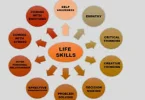
- Communication Skills: Expressing ideas clearly and listening effectively to others.
- Decision-Making and Problem-Solving: Evaluating situations and choosing the best course of action.
- Time Management: Organizing tasks, prioritizing responsibilities, and meeting deadlines.
- Emotional Intelligence: Understanding and managing your emotions, and empathizing with others.
- Adaptability: Adjusting to new situations, overcoming obstacles, and staying resilient.
Life skills are essential for personal growth, professional success, and overall well-being. While academic skills provide knowledge, life skills ensure that you can apply that knowledge effectively in everyday life.
Life Skills vs Academic Skills: Key Differences
Focus and Purpose
Academic skills focus on intellectual growth and knowledge. They are gained through formal education such as school, college, or online courses. These skills help you understand concepts, solve problems in subjects like math or science, conduct research, and gain specialized knowledge in your chosen field.
Life skills, on the other hand, focus on practical abilities needed to navigate real-world challenges. They help you communicate effectively, make informed decisions, solve problems, manage time, and handle emotions. Life skills are essential for personal growth, relationships, and adapting to change.
Learning Method
Academic skills are usually learned in structured environments like classrooms, through textbooks, assignments, and exams. They rely on memorization, critical thinking, and logical reasoning.
Life skills are learned through experience, observation, and practice. Everyday situations, social interactions, and real-life challenges provide opportunities to develop these skills. Unlike academic skills, they cannot be graded or measured with tests.
Evaluation
Academic skills are measured using grades, exams, and certifications, which show how well you understand a subject or concept.
Life skills, however, are evaluated by how effectively you apply them in real-life situations. For example, good communication skills can be seen in teamwork, conflict resolution, and the ability to express ideas clearly.
Summary
While academic skills prepare you to succeed in school, exams, and professional work, life skills ensure that you can apply that knowledge effectively in everyday life. Developing both is essential for a balanced, successful, and fulfilling life.
Why Both Skills Are Important
Enhancing Career Success
Both academic skills and life skills are essential for achieving career success. Academic skills provide the knowledge and technical expertise needed to perform tasks, meet deadlines, and excel in exams or professional certifications. For example, a student with strong coding skills can build software efficiently, while a business student with financial knowledge can analyze budgets accurately.
Life skills complement academic knowledge by ensuring that you can apply it effectively. Skills like communication, teamwork, leadership, and problem-solving allow you to work well with colleagues, handle workplace challenges, and make smart decisions. A software developer with excellent coding skills may still fail to succeed if they cannot communicate effectively with clients or team members.
Promoting Personal Development
Life skills are key to personal growth. They help individuals manage stress, build self-confidence, make informed decisions, and develop emotional intelligence. For instance, time management skills enable students to balance studying, extracurricular activities, and personal life efficiently.
Academic skills, on the other hand, improve critical thinking, logical reasoning, and knowledge acquisition. Together, academic and life skills ensure that a person is not only intelligent but also capable of handling real-world situations with maturity and confidence. Life Skills vs Academic Skills
Achieving a Balanced Life
A balance between academic and life skills is crucial. Focusing solely on academic skills may lead to poor interpersonal relationships, difficulty handling stress, and challenges in adapting to change. Conversely, having strong life skills without academic knowledge can limit professional opportunities and personal growth. Life Skills vs Academic Skills
For example, a student who excels academically but struggles with teamwork may find it hard to succeed in group projects or workplace environments. A person with strong life skills but weak academic knowledge may face obstacles in pursuing specialized careers. Combining both skills creates a well-rounded individual capable of thriving in all aspects of life. Life Skills vs Academic Skills
Preparing for Real-World Challenges
Life often presents unpredictable situations that require more than just textbook knowledge. Academic skills provide structured problem-solving abilities, while life skills help you navigate unexpected challenges.
For instance, understanding financial principles (academic skill) helps you budget money effectively, but negotiation skills and emotional intelligence (life skills) allow you to handle conflicts, unexpected expenses, or career transitions. Developing both ensures you are ready to face personal, social, and professional challenges with confidence and efficiency.
Building Long-Term Success
Developing both life skills and academic skills is an investment in long-term success. Academic skills provide a foundation for professional achievements, while life skills ensure sustainable growth, resilience, and happiness. Together, they create a strong support system for making smart decisions, maintaining healthy relationships, and achieving life goals.
you may also like to read these posts;
What is Smart Learning? Benefits, Features, and Future Guide
Types of Smart Learning Methods for Modern Education
How to Apply Smart Learning in Daily Study for Better Results
Why Smart Learning is Effective: Boost Your Skills Fast
Top Smart Learning Strategies to Study Better in 2025
Tips to Improve Academic and Life Skills
Set Clear Goals
Setting clear goals is the first step to improving both academic and life skills. For academic skills, define what subjects or topics you want to master, such as improving your math or writing abilities. For life skills, set goals like enhancing communication, time management, or decision-making. Clear goals give you direction and motivation to practice consistently.
Practice Regularly
Regular practice is key to skill development. For academic skills, dedicate time to studying, solving problems, and revising concepts daily. Use study schedules, quizzes, and online resources to strengthen your knowledge.
For life skills, practice through real-life situations. For example, improve communication by participating in discussions or presentations, enhance time management by organizing daily tasks, and boost decision-making by evaluating pros and cons before choosing an action.
Seek Feedback and Learn from Others
Feedback helps identify areas for improvement. For academic skills, ask teachers, mentors, or peers for constructive criticism on assignments, projects, or presentations.
For life skills, observe how successful individuals handle challenges. Seek advice on improving your interpersonal skills, emotional intelligence, or leadership abilities. Learning from others’ experiences accelerates your personal growth. Life Skills vs Academic Skills
Stay Curious and Open to Learning
Curiosity drives continuous improvement. For academic skills, explore subjects beyond your curriculum, take online courses, and read books to expand your knowledge. Life Skills vs Academic Skills
For life skills, embrace new experiences, meet different people, and try activities that challenge your comfort zone. This helps you develop adaptability, problem-solving, and creative thinking. Life Skills vs Academic Skills
Reflect on Your Experiences
Reflection is a powerful tool for growth. After completing academic tasks or facing real-life challenges, take time to analyze what worked, what didn’t, and what you can do better next time. Life Skills vs Academic Skills
For example, if you struggled with a group project, reflect on how you communicated with teammates and what life skills could improve collaboration in the future. Similarly, if you found a subject difficult, reflect on your study methods and adjust them for better results. Life Skills vs Academic Skills
Balance Academic and Life Skills Development
Finally, ensure you work on both types of skills simultaneously. Dedicate time for studying, practicing, and learning new knowledge, but also focus on personal development, relationships, and real-world experiences. Balanced growth leads to success in both professional and personal life. life skills vs academic skills
Advantages of Life Skills and Academic Skills
Advantages of Academic Skills
- Career Opportunities
Academic skills are the foundation for professional success. Strong knowledge in subjects like science, technology, mathematics, or business increases your chances of securing good jobs, scholarships, and higher education opportunities. For example, a student with advanced coding skills can land a role as a software developer or IT specialist. - Critical Thinking and Problem-Solving
Academic skills enhance logical reasoning, analytical thinking, and problem-solving abilities. These skills are not only useful for exams but also for real-life situations where structured thinking is required, such as analyzing data, planning projects, or managing resources efficiently. life skills vs academic skills - Specialized Knowledge
By mastering academic skills, you gain expertise in a specific field, whether it’s medicine, engineering, finance, or creative arts. This specialized knowledge makes you competitive in the job market and prepares you for advanced career opportunities. life skills vs academic skills - Boosts Confidence in Learning
Academic achievements boost your self-confidence. Successfully solving complex problems, completing research projects, or performing well in exams reinforces your belief in your abilities and motivates you to take on bigger challenges. - Foundation for Lifelong Learning
Academic skills develop curiosity and a love for learning. They provide a strong foundation for continuous education, professional growth, and adapting to new technologies or trends in your field. life skills vs academic skills
Advantages of Life Skills
- Effective Communication
Life skills improve your ability to express ideas clearly, listen actively, and resolve conflicts. Strong communication skills are valuable in school, workplace, and personal relationships, helping you convey your thoughts confidently and build trust with others. life skills vs academic skills - Better Decision-Making
Life skills equip you to make informed choices in everyday life. Whether it’s choosing a career path, managing finances, or handling interpersonal conflicts, decision-making and problem-solving skills help you achieve better outcomes. life skills vs academic skills - Adaptability and Resilience
Life skills teach you how to cope with change, recover from setbacks, and handle unexpected challenges. For example, adapting to a new work environment or overcoming personal difficulties becomes easier with strong life skills. - Time Management and Productivity
By learning how to plan, prioritize, and organize tasks, life skills help you use your time effectively. This reduces stress, improves efficiency, and allows you to balance work, studies, and personal life successfully. life skills vs academic skills - Emotional Intelligence and Self-Awareness
Life skills help you understand and manage your emotions while empathizing with others. Emotional intelligence improves relationships, teamwork, and conflict resolution, contributing to overall personal and professional growth. - Overall Personal Growth
Life skills foster self-confidence, independence, and a positive attitude toward challenges. They enhance your social, emotional, and mental well-being, making you a well-rounded, capable individual ready to succeed in all areas of life.
Features of Life Skills and Academic Skills

Features of Academic Skills
- Knowledge-Oriented
Academic skills focus on acquiring knowledge in subjects like mathematics, science, language, and technology. They aim to build intellectual understanding and expertise. life skills vs academic skills - Structured Learning
These skills are usually learned in a formal, organized environment such as schools, colleges, or online courses. The learning process follows a syllabus or curriculum. life skills vs academic skills - Measurable and Evaluated
Academic skills can be assessed through exams, assignments, grades, or certifications, providing a clear measure of progress and proficiency. life skills vs academic skills - Specialization
Academic skills allow individuals to specialize in specific fields, giving them expertise and preparing them for professional careers. life skills vs academic skills - Critical Thinking Development
These skills enhance analytical abilities, problem-solving, and logical reasoning, which are useful for both studies and professional work. life skills vs academic skills
Features of Life Skills
- Practical and Real-World Oriented
Life skills focus on abilities needed to handle everyday challenges, make decisions, and solve problems in real-life situations. life skills vs academic skills - Learned Through Experience
Unlike academic skills, life skills are often learned through observation, practice, and personal experiences rather than formal education. life skills vs academic skills - Application-Based
Life skills are demonstrated through actions, such as effective communication, teamwork, adaptability, and time management. Their success is seen in real-life outcomes rather than grades. life skills vs academic skills - Personal and Social Development
These skills enhance emotional intelligence, self-confidence, empathy, and relationship-building, contributing to overall personal growth. life skills vs academic skills - Flexible and Adaptive
Life skills are adaptable to different situations, allowing individuals to adjust to new environments, handle challenges, and respond positively to change. life skills vs academic skills
What is the main difference between life skills and academic skills?
Academic skills focus on knowledge, learning, and intellectual growth, while life skills are practical abilities that help you handle real-life challenges, make decisions, and build relationships.
Can life skills be learned in school?
Yes, schools can teach some life skills through group activities, leadership programs, communication exercises, and problem-solving tasks. However, most life skills are also developed through real-world experiences and personal practice.
Which skills are more important: life skills or academic skills?
Both are important. Academic skills help you gain knowledge and professional expertise, while life skills allow you to apply that knowledge effectively in real life. A balance of both ensures personal, professional, and social success.
How can students improve both academic and life skills simultaneously?
Students can improve academic skills by studying regularly, practicing problem-solving, and seeking guidance from teachers or mentors. Life skills can be improved through teamwork, effective communication, time management, decision-making exercises, and participating in real-life experiences.
Why are life skills essential in the workplace?
Life skills like communication, adaptability, teamwork, and problem-solving are essential for working effectively with colleagues, managing tasks efficiently, and navigating professional challenges. Without life skills, academic knowledge alone may not lead to success.
Can adults improve life skills even after finishing school?
Absolutely. Life skills can be learned and refined at any age through practice, observation, training programs, workshops, and real-life experiences. Continuous improvement of life skills contributes to long-term personal and professional growth.
Conclusion
In today’s world, success requires more than just academic knowledge. While academic skills provide the foundation for learning, critical thinking, and professional expertise, life skills enable individuals to navigate real-world challenges, make smart decisions, and build meaningful relationships.
Understanding the difference between life skills vs academic skills helps you focus on developing both. Academic skills prepare you for exams, careers, and specialized tasks, while life skills ensure that you can apply your knowledge effectively, handle challenges, and grow personally and socially.
By balancing and improving both types of skills, you can achieve not only professional success but also personal happiness, confidence, and resilience. Developing a strong combination of life and academic skills is the key to becoming a well-rounded, capable, and successful individual.